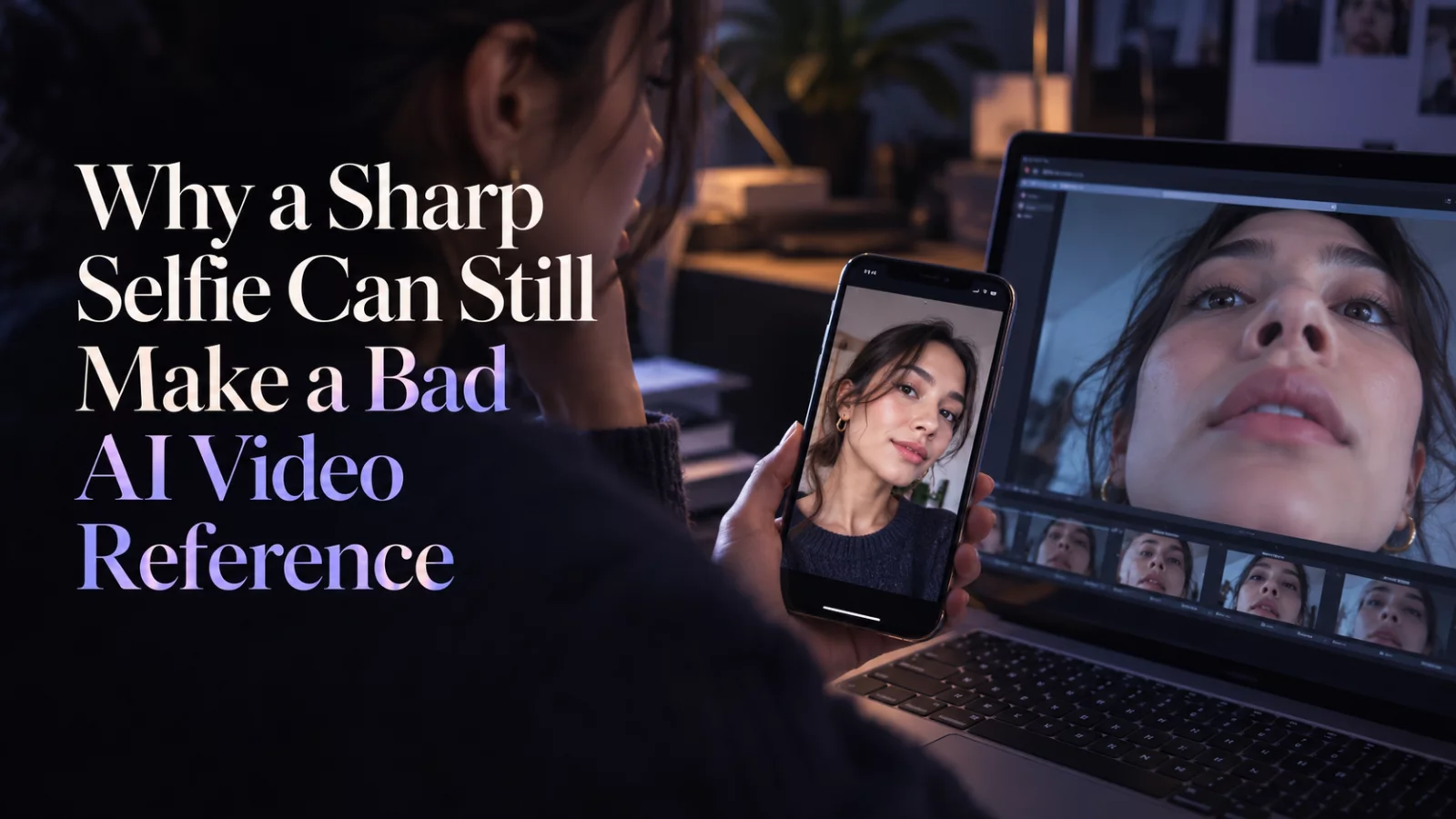
A phone selfie can look excellent on your screen and still be a poor starting point for an AI scene. That sounds contradictory until you remember what the camera is doing. A close selfie stretches facial proportions, often enlarging the nose and compressing the ears. The image is sharp, but its geometry is unusual.
Camera distance matters
A photograph taken from arm's length is not equivalent to a portrait taken from farther away with a different lens. A model may try to preserve the selfie's perspective in a scene that uses a longer camera distance, making the new face appear oddly shaped.
If possible, use a natural portrait where the camera was not pressed close to the subject's face. A slight head angle is fine. You are not looking for a passport photo; you are looking for reliable information about facial proportions.
Watch out for invisible filters
Many camera apps quietly smooth skin, reshape eyes or sharpen features. Those effects can make a still photo flattering, but they do not always translate well to moving video. The generated person may flicker between the filtered face and a more natural face as they turn.
Choose a source without beauty filters when realistic identity is the goal. You can still color-grade the final edit later.
Crop generously around the head
When the top of the hair or the chin is cut off, the model has to infer a significant part of the person's silhouette. Leave room around the forehead, ears, jaw and shoulders. A tightly cropped face might be fine for an avatar, but it gives a video model less context.
The background does not need to be perfect. A slightly untidy room is usually less harmful than motion blur across the eyes.
One good photo beats five similar bad ones
Some workflows accept multiple references, but they need meaningful variation. Five consecutive selfies from the same angle often add less information than two clear pictures from complementary angles. Always follow the model's rules about whether the images represent one person or different characters.
If you are struggling with believable faces, review our broader reference image checklist.